Un rivenditore che appone il proprio nome su un set di stoviglie non sta più semplicemente acquistando piatti; sta finanziando lo smalto, la resistenza alle scheggiature e il tasso di resi. È per questo che la ceramica a marchio privato ha smesso di essere una semplice scelta orientata al costo ed è diventata una strategia di categoria, e perché le conversazioni sull’approvvigionamento ora iniziano con un piano di scaffale anziché con un listino prezzi.
Questo articolo è rivolto ad acquirenti retail, proprietari di marchi e importatori che stanno creando o ampliando un programma di ceramica a marchio privato. Tratta la definizione della gamma, la proprietà degli stampi, il branding resistente al lavaggio in lavastoviglie, i test da richiedere e come mantenere la coerenza di una gamma personalizzata di stoviglie ceramiche tra ordini successivi.
Dove si sposta il margine retail
MarkNtel Advisors aestimat valorem mercatus privatus globalis ad USD 1 019,23 miliardos in anno 2026, crescentem ad USD 1 723,80 miliardos ad annum 2032, cum CAGR 9,15% (rapportus dato mense Maio 2026). Vascula culinaria sunt in segmento bonorum consumptorium; marca privata cepit 42% venditionum valoris FMCG in magnis mercatus Europaeis anno 2024, et Europa tenet fere 40% postulationis globalis.
Attractio non est tantum pretii. Eodem raportu invenitur quod 84% consummatorem confidunt in marca privata aeque aut magis quam in marcas nationales, et 86% mercatorum ciborum proponunt augere investitiones in marcas privatas. Cum emptores iam acceptaverint marcam, vascula mensae sunt naturalis extensio, et ceramicae marcae privatae sequuntur eandem curvam fiduciae. Quaelibet fabrica ceramicae vasculorum mensae, quae certat solummodo super pretio unitario, nunc vincitur ab ea quae potest tenere glazuram per omnes temporas.
Buyers evaluating an OEM ceramic supplier for a retail label are buying consistency: a tone mismatch between deliveries is visible on a shelf in a way a hidden defect never is. A ceramic tableware manufacturer that publishes its tolerance band is easier to trust than one answering with adjectives.
Write the Shelf Plan Before the Brief
Private label ceramics projects fail at the brief, not the kiln. A brief listing 30 SKUs across six shape families and four glazes asks a porcelain dinnerware factory, or any OEM ceramic supplier, to control hundreds of combinations, each with its own colour-variation threshold and none of them proven.
Work the other way. Choose two shape families, one glaze direction and one decoration method for the first collection, then let the range grow once reorders behave. Retailers who keep a first custom ceramic tableware collection tight reach the second order faster, and a ceramic tableware manufacturer holds tolerance on a narrow range far more reliably.
Shapes and Glazes Carry the Commercial Weight
Shape family sets the price ladder: a coupe plate, a deep bowl and a mug cover everyday dining, while a custom ceramic tableware serving piece in reactive glaze supports a higher ticket. Buyers shortlist dinnerware shapes against a real range before choosing glazes. Glaze direction sets the risk: a uniform gloss matches easily, while a reactive finish sells on variation and depends on an approved sample from a porcelain dinnerware factory.
Decoration sets durability. A printed mark under a retail label must survive repeated washing, so ask a ceramic tableware manufacturer to quote decoration life in wash cycles, not vague assurances. A porcelain dinnerware factory printing in-glaze is usually the safer partner for a custom ceramic tableware programme intended to run for years.
Tooling and Mould Ownership
Novae formae novos matrices significare, et dominium matricum est ubi programmmata ceramicae privatae labuntur. Statuere quis instrumenta solvat, ubi serventur, num sint exclusiva, et quid accidat cum relatio finiatur. Fornax ceramica OEM quae non respondet his quattuor quaestionibus scriptis iam respondet.
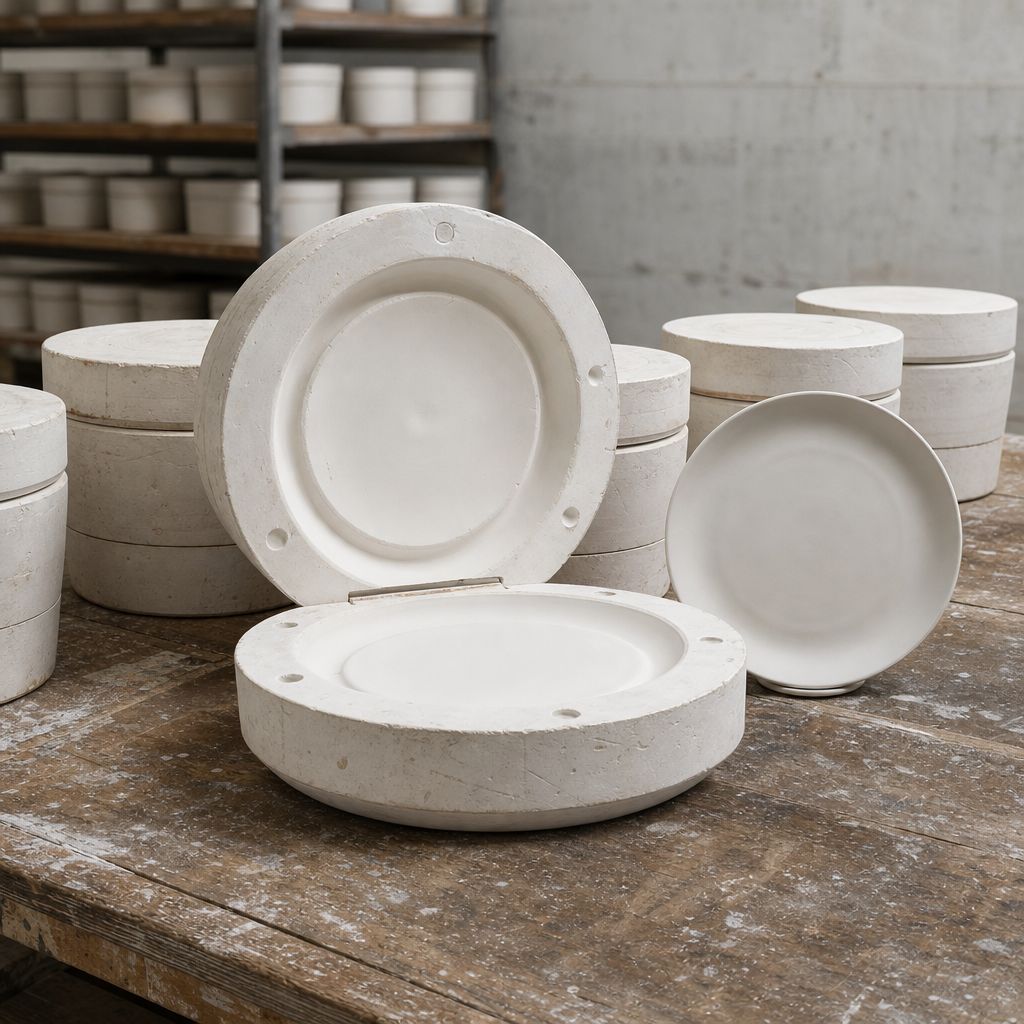
Exclusivitas magis quam pretium instrumentorum valet. Si fornax ceramica OEM tuam formam in matrice factam ad concursum vendere potest, differentia una aestate evanescit. Fornax porcellanea quae matricem iuxta exemplar probatum archivat, et fabricator vasorum ceramice qui nomen archivi in contractu ponit, reordinem praedictum faciunt.
Marca quae lavatorium superat
Retail branding on ceramics runs through three channels: decal printing, relief or embossing, and glaze colour itself. Decal offers the most artwork freedom and needs an in-glaze process to survive washing. Relief gives a mark that never fades. An oem ceramic supplier, or a porcelain dinnerware factory with its own decorating line, should produce all three from the same body.
Colour matching is the quiet risk. A brand colour reproduced in glaze shifts slightly between batches, so approve a tolerance band rather than a single swatch, and compare a washed sample against a pristine one under selling light. A custom ceramic tableware range shot for e-commerce needs the photography sample and the production sample to agree, or returns follow.
Testing Before the First Shipment
A retail label carries liability, so hold documents rather than assurances. Match the test to the market: LFGB and (EC) No 1935/2004 for the European Union, FDA requirements for the United States, California Proposition 65 for the West Coast, plus a lead and cadmium migration report issued against the production batch of your private label ceramics, and confirm the custom ceramic tableware specification matches the tested sample.
Certification breadth also predicts your compliance workload. Chaozhou Qianyue Ceramics, founded in 1984 and running two factories with more than 12 production lines, holds BSCI, LFGB, (EC) No 1935/2004, ISO 9001 and ISO 45001 certification, and manufactures lead-free, cadmium-free ware that is microwave and dishwasher safe. For a ceramic tableware manufacturer supplying retail labels, or a porcelain dinnerware factory auditing kiln discipline, that paperwork removes risk rather than adding it.
Retail-Ready Packaging and Case Configuration
Emballage à marque propre habet duos officios: superare navem, vendere e mensa. Specificare involucrum singulare, divisores corrugatos, fortitudinem compressionis cartonum et numerum casuum per SKU. Programma ceramicae mensae ad mensuram, quod emballagium ut res post factum tractat, pretium suum in petitionibus solvit.
Praesentatio ad mercatum addit stratum: cartones impressos, vasculum internum aptum ad mensam et positio codicis barbati omnia lineam impacandi mutant. Eo suscitate apud fabricantem ceramicae OEM in statu citandi: adiungere emballagium ad mercatum ad ordinem ceramicae ad mensuram postea carum est.
Ubi pecunia vere sedet
Pretium per unitatem est levissima machina in ceramica ad mensuram. Amortisatio instrumentorum, rotundationes exemplarium, dispositio ornatus, experimenta et vectura per quantitatem ordinis diffunduntur, et diversimode se habent pro magnitudine. Fabricator ceramicae mensae qui unum numerum mixtum citat omnia abscondit, dum fornitor ceramicae OEM qui singula recenset facilius comparari potest.
Ask a ceramic tableware manufacturer for tooling, sampling, production and packaging as separate lines, then compare totals at your realistic annual volume. When a custom ceramic tableware quote folds tooling into the piece price, suppliers stop being comparable and the highest unit price can quietly be the cheapest programme. Ask a porcelain dinnerware factory to price a second collection separately, so the cost of extending the range is visible.
Reorder Discipline Decides Year Two
Year two decides whether private label ceramics worked. Body weight drifts, glaze tone shifts and rim thickness moves across reorders, and a shopper who bought one plate notices a mismatched one immediately. A porcelain dinnerware factory holding sealed approval samples for years behaves differently from one reordering by eye.
Fix the mechanism before the first order ships: sealed approval samples, a stated archive period, a named colour sign-off and a written tolerance band attached to the specification. Where a custom ceramic tableware range spans seasons, insist that an oem ceramic supplier re-approve colour against the sealed sample, not the previous batch.
Quaestiones Frequentes
Can we launch a private label ceramics line without new tooling? Yes. An existing shape with your own glaze and decoration is the fastest route into private label ceramics, and most retailers start there first.
Who should own the mould? The retailer or brand, wherever possible. Owned tooling keeps the shape exclusive and makes it easier to move to another porcelain dinnerware factory later.
What should the first purchase order reference? The approved sample number, tolerance band, decoration method, test reports and packaging specification, all attached to the custom ceramic tableware order rather than agreed verbally.
Getting a Range Reviewed
Send the shelf plan, target market and price positioning to [email protected]or call +86-13534638099. The team reviews the brief, proposes shapes and glazes for your private label ceramics collection, quotes tooling separately, and ships samples before any ceramic tableware manufacturer commitment is made. The full range is on the products page .
Chaozhou Qianyue Ceramics has made custom ceramic tableware since 1984 for buyers across Europe, North America, South America, Oceania, Asia and the Middle East. Two factories, more than 12 production lines and a documented export packing standard sit behind every order, whether a buyer needs an oem ceramic supplier for a first collection or a porcelain dinnerware factory and ceramic tableware manufacturer working from a single approved sample.
 EN