A retailer putting its own name on a dinnerware set is no longer buying plates; it is underwriting the glaze, the chip resistance and the return rate. That is why private label ceramics has shifted from a cost play to a category strategy, and why sourcing conversations now open with a shelf plan instead of a price list.
This article is for retail buyers, brand owners and importers building or extending a private label ceramics programme. It covers the range brief, mould ownership, branding that survives a dishwasher, the tests to demand, and how to keep a custom ceramic tableware range consistent across reorders.
Where the Retail Margin Is Moving
MarkNtel Advisors values the global private label market at USD 1,019.23 billion in 2026, rising to USD 1,723.80 billion by 2032 at a 9.15% CAGR (report dated May 2026). Kitchenware sits inside the consumer goods segment; private label took 42% of FMCG value sales across major European markets in 2024, with Europe holding roughly 40% of global demand.
The pull is not only price. The same report finds 84% of consumers trust private label as much as or more than national brands, and 86% of food retailers plan to increase private brand investment. Once shoppers accept the label, tableware is a natural extension, and private label ceramics follows the same trust curve. Any ceramic tableware manufacturer competing only on unit price now loses to one that can hold a glaze across seasons.
Buyers evaluating an oem ceramic supplier for a retail label are buying consistency: a tone mismatch between deliveries is visible on a shelf in a way a hidden defect never is. A ceramic tableware manufacturer that publishes its tolerance band is easier to trust than one answering with adjectives.
Write the Shelf Plan Before the Brief
Private label ceramics projects fail at the brief, not the kiln. A brief listing 30 SKUs across six shape families and four glazes asks a porcelain dinnerware factory, or any oem ceramic supplier, to control hundreds of combinations, each with its own colour-variation threshold and none of them proven.
Work the other way. Choose two shape families, one glaze direction and one decoration method for the first collection, then let the range grow once reorders behave. Retailers who keep a first custom ceramic tableware collection tight reach the second order faster, and a ceramic tableware manufacturer holds tolerance on a narrow range far more reliably.
Shapes and Glazes Carry the Commercial Weight
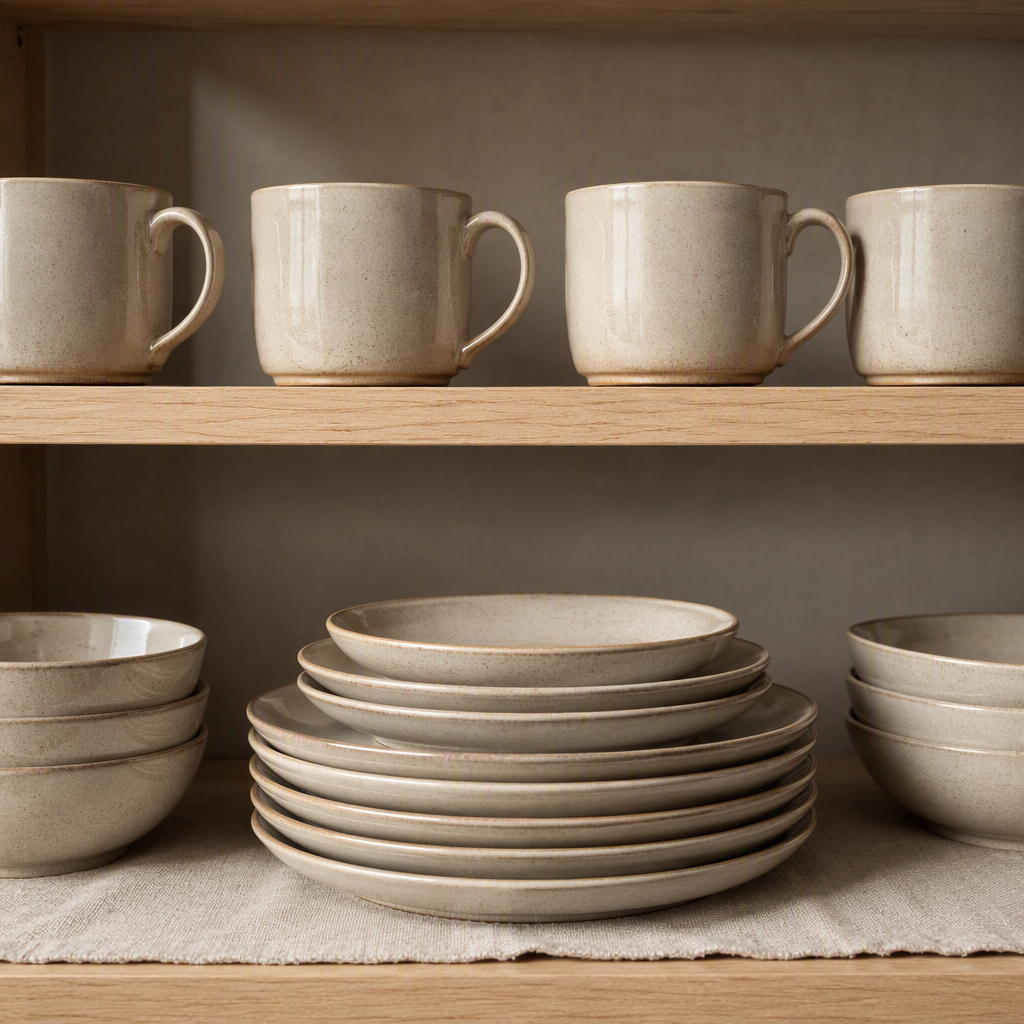
Shape family sets the price ladder: a coupe plate, a deep bowl and a mug cover everyday dining, while a custom ceramic tableware serving piece in reactive glaze supports a higher ticket. Buyers shortlist dinnerware shapes against a real range before choosing glazes. Glaze direction sets the risk: a uniform gloss matches easily, while a reactive finish sells on variation and depends on an approved sample from a porcelain dinnerware factory.
Decoration sets durability. A printed mark under a retail label must survive repeated washing, so ask a ceramic tableware manufacturer to quote decoration life in wash cycles, not vague assurances. A porcelain dinnerware factory printing in-glaze is usually the safer partner for a custom ceramic tableware programme intended to run for years.
Tooling and Mould Ownership
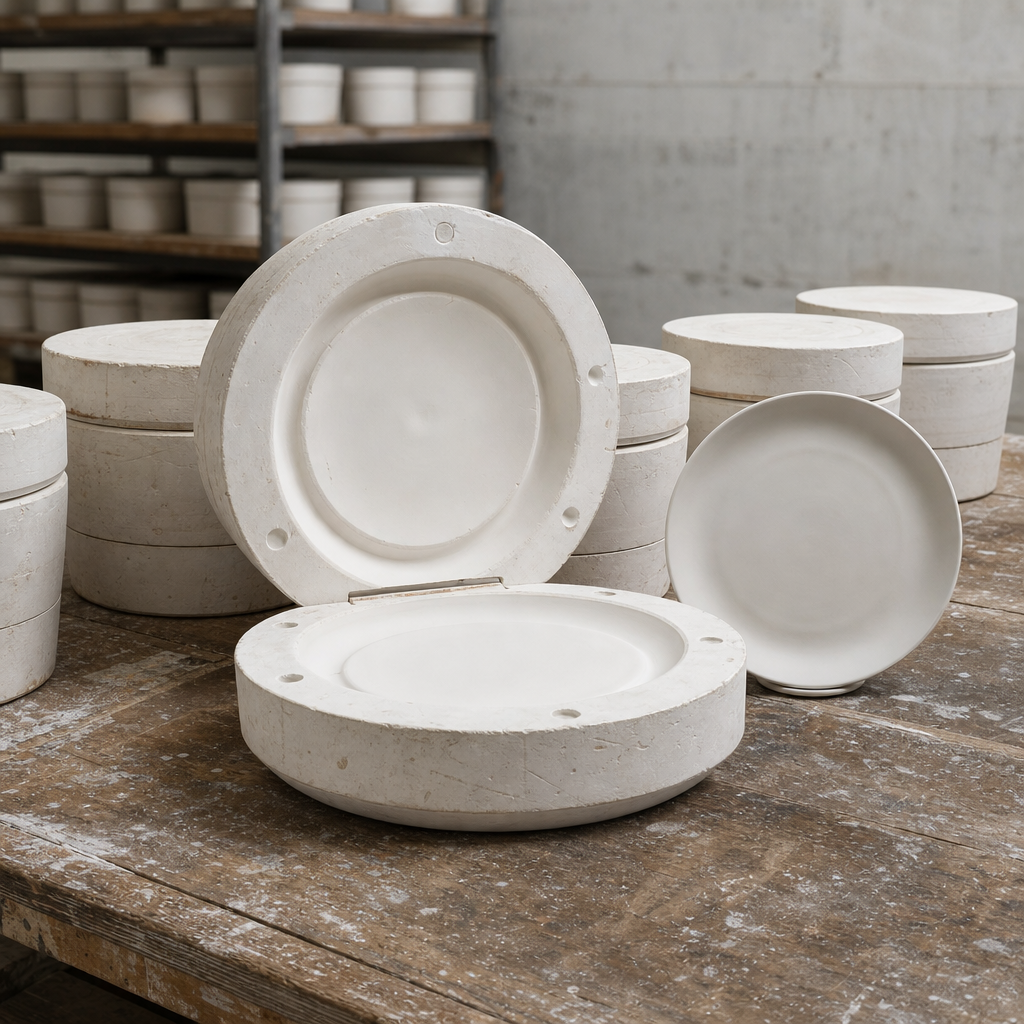
New shapes mean new moulds, and mould ownership is where private label ceramics programmes break. Settle who pays for tooling, where it is stored, whether it is exclusive, and what happens when the relationship ends. An oem ceramic supplier that will not answer those four questions in writing is answering them anyway.
Exclusivity matters more than tooling cost. If an oem ceramic supplier may sell your moulded shape to a competing retailer, the differentiation disappears in one season. A porcelain dinnerware factory archiving the mould beside the approved sample, and a ceramic tableware manufacturer naming the archive in the contract, make the reorder predictable.
Branding That Survives the Dishwasher
Retail branding on ceramics runs through three channels: decal printing, relief or embossing, and glaze colour itself. Decal offers the most artwork freedom and needs an in-glaze process to survive washing. Relief gives a mark that never fades. An oem ceramic supplier, or a porcelain dinnerware factory with its own decorating line, should produce all three from the same body.
Colour matching is the quiet risk. A brand colour reproduced in glaze shifts slightly between batches, so approve a tolerance band rather than a single swatch, and compare a washed sample against a pristine one under selling light. A custom ceramic tableware range shot for e-commerce needs the photography sample and the production sample to agree, or returns follow.
Testing Before the First Shipment
A retail label carries liability, so hold documents rather than assurances. Match the test to the market: LFGB and (EC) No 1935/2004 for the European Union, FDA requirements for the United States, California Proposition 65 for the West Coast, plus a lead and cadmium migration report issued against the production batch of your private label ceramics, and confirm the custom ceramic tableware specification matches the tested sample.
Certification breadth also predicts your compliance workload. Chaozhou Qianyue Ceramics, founded in 1984 and running two factories with more than 12 production lines, holds BSCI, LFGB, (EC) No 1935/2004, ISO 9001 and ISO 45001 certification, and manufactures lead-free, cadmium-free ware that is microwave and dishwasher safe. For a ceramic tableware manufacturer supplying retail labels, or a porcelain dinnerware factory auditing kiln discipline, that paperwork removes risk rather than adding it.
Retail-Ready Packaging and Case Configuration
Private label packaging has two jobs: survive the container, sell from the shelf. Specify individual wrapping, corrugated dividers, carton compression strength and case count per SKU. A custom ceramic tableware programme that treats packaging as an afterthought pays for it in claims.
Retail presentation adds a layer: printed cartons, a shelf-ready inner tray and barcode placement all change the packing line. Raise it with an oem ceramic supplier at the quoting stage: retrofitting retail packaging onto a private label ceramics order later is expensive.
Where the Money Actually Sits
Unit price is the smallest lever in private label ceramics. Tooling amortisation, sample rounds, decoration set-up, testing and freight spread across order quantity, and behave differently at volume. A ceramic tableware manufacturer quoting one blended number hides all of it, while an oem ceramic supplier that itemises is easier to compare.
Ask a ceramic tableware manufacturer for tooling, sampling, production and packaging as separate lines, then compare totals at your realistic annual volume. When a custom ceramic tableware quote folds tooling into the piece price, suppliers stop being comparable and the highest unit price can quietly be the cheapest programme. Ask a porcelain dinnerware factory to price a second collection separately, so the cost of extending the range is visible.
Reorder Discipline Decides Year Two
Year two decides whether private label ceramics worked. Body weight drifts, glaze tone shifts and rim thickness moves across reorders, and a shopper who bought one plate notices a mismatched one immediately. A porcelain dinnerware factory holding sealed approval samples for years behaves differently from one reordering by eye.
Fix the mechanism before the first order ships: sealed approval samples, a stated archive period, a named colour sign-off and a written tolerance band attached to the specification. Where a custom ceramic tableware range spans seasons, insist that an oem ceramic supplier re-approve colour against the sealed sample, not the previous batch.
FAQ
Can we launch a private label ceramics line without new tooling? Yes. An existing shape with your own glaze and decoration is the fastest route into private label ceramics, and most retailers start there first.
Who should own the mould? The retailer or brand, wherever possible. Owned tooling keeps the shape exclusive and makes it easier to move to another porcelain dinnerware factory later.
What should the first purchase order reference? The approved sample number, tolerance band, decoration method, test reports and packaging specification, all attached to the custom ceramic tableware order rather than agreed verbally.
Getting a Range Reviewed
Send the shelf plan, target market and price positioning to [email protected] or call +86-13534638099. The team reviews the brief, proposes shapes and glazes for your private label ceramics collection, quotes tooling separately, and ships samples before any ceramic tableware manufacturer commitment is made. The full range is on the products page.
Chaozhou Qianyue Ceramics has made custom ceramic tableware since 1984 for buyers across Europe, North America, South America, Oceania, Asia and the Middle East. Two factories, more than 12 production lines and a documented export packing standard sit behind every order, whether a buyer needs an oem ceramic supplier for a first collection or a porcelain dinnerware factory and ceramic tableware manufacturer working from a single approved sample.
 EN
EN